
Make Every Inch
Work Smarter.
26 renter-friendly organization ideas for counters, cabinets, pantry space, and every overlooked corner—without drilling or permanent changes.
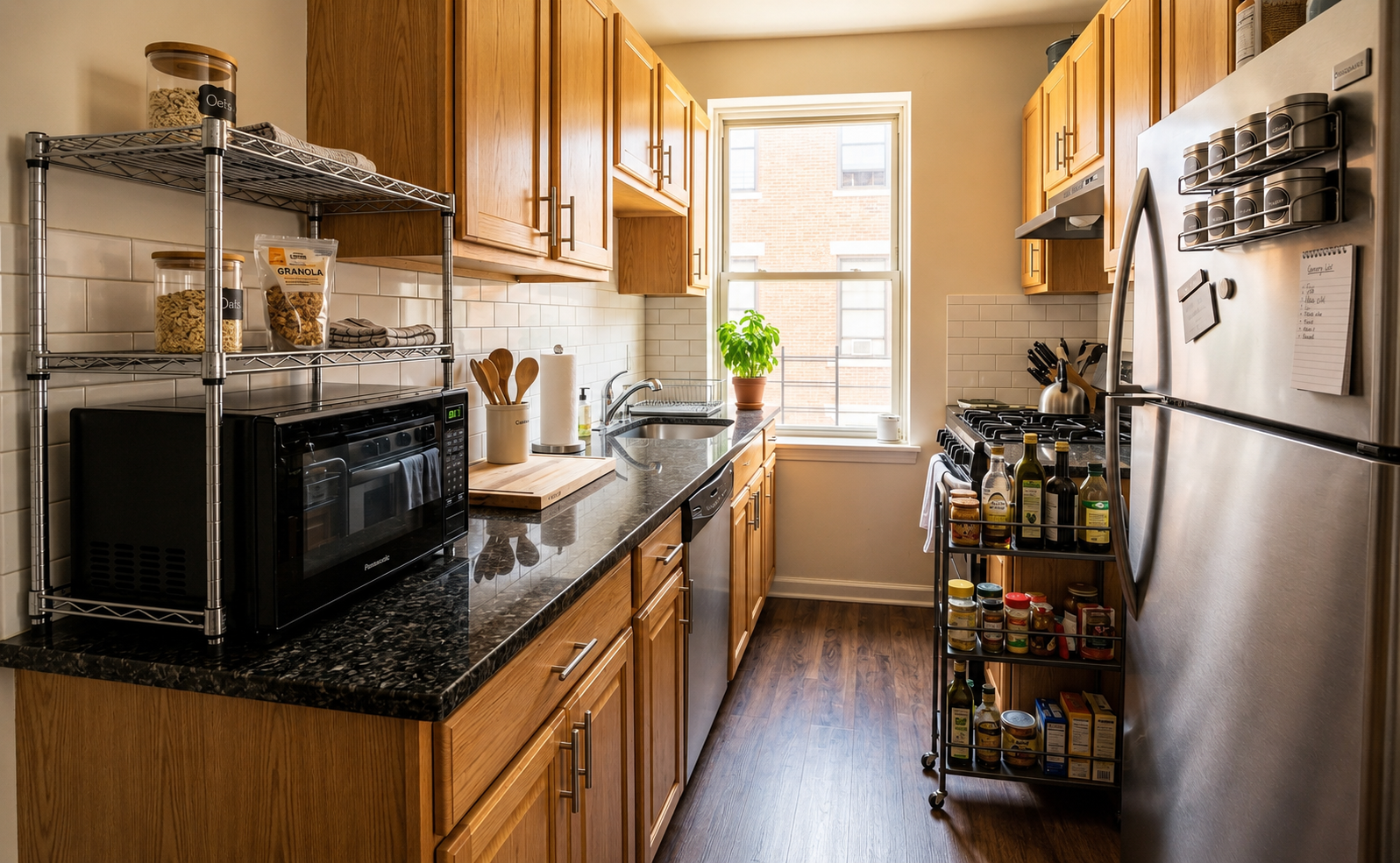
The Complete Small Apartment Kitchen Organization Guide: 26 No-Drill Ideas for Renters
Disclosure: This post contains Amazon affiliate links. As an Amazon Associate we earn from qualifying purchases, at no additional cost to you.
A small rental kitchen has a specific kind of chaos: the counter fills up first, then the “junk cabinet” becomes two junk cabinets, and eventually you’re storing pans in the oven because there’s nowhere else to put them. None of that means your small apartment kitchen is too small to work with — it usually means the space hasn’t been organized to match how you actually cook. This guide is part of our broader Small Kitchen collection, where every idea starts with an actual measurement.
This guide walks through 26 numbered ideas for small apartment kitchen organization across every zone, in the order that actually makes sense when you’re standing in it: counter, cabinets, pantry, fridge, walls, corners, sink area, and the awkward gaps in between. Nineteen of these ideas are paired with a specific type of product worth buying; the rest are free or low-cost habits and fixes. Every idea is designed to minimize permanent changes, but always check your lease and surface compatibility before installing anything.
You don’t need all 26. Pick the zones that match your biggest daily frustration first, and treat the rest as a reference to come back to.
Before buying anything: check your lease. Some landlords are fine with adhesive strips but not tension rods pressed against cabinet walls, or vice versa. A two-minute read now saves an awkward move-out conversation later.
Table of Contents
- Measure Before You Buy
- How We Choose Products
- Before You Start: What to Expect
- Countertop Zone (Ideas 1–2)
- Inside Your Cabinets (Ideas 3–6)
- Pantry & Dry Goods (Ideas 7–9)
- Spices & Magnetic Storage (Ideas 10–11)
- Inside the Fridge & Freezer (Ideas 12–13)
- Cabinet Doors & Bare Walls (Ideas 14–15)
- Corners (Idea 16)
- The Rolling Cart (Idea 17)
- Sink Area & Dish Drying (Ideas 18–20)
- Pots, Pans & Baking Trays (Ideas 21–23)
- Trash & Recycling (Idea 24)
- Safety & Lease-Friendly Habits (Ideas 25–26)
- Mistakes to Avoid
- Organize Your Kitchen in One Day: The Plan
- FAQ
Measure Before You Buy
The single most common reason a storage product ends up unused in a closet is a bad fit. Before ordering anything, spend ten minutes with a tape measure and note down:
- Cabinet interior height, width, and depth (open the door and measure the actual usable space, not the outside of the cabinet)
- The gap next to the fridge or at the end of a counter run, if you’re eyeing a rolling cart
- Under-sink clearance, accounting for pipes — measure the narrowest point, not the widest
- Door thickness and swing clearance, if you’re buying anything that hooks over a cabinet or pantry door — the door still needs to close fully once it’s loaded
- Sink width and faucet height, if you’re considering an over-the-sink rack
Write these numbers down on your phone before you start browsing. It turns “this looks about right” into “this is confirmed to fit,” which helps reduce avoidable returns.
How We Choose Products
Every product mentioned in this guide is selected against the same checklist, regardless of category:
- Fit for small apartments — compact footprint, or a clear size range that works in tight spaces
- No-drill compatibility — freestanding, adhesive, tension-mounted, or hook-based, never requiring permanent wall or cabinet drilling
- Clear, verifiable dimensions — sizing information that can be checked against your own measurements before buying
- Stability and materials — construction that holds up to daily kitchen use, not just a single use
- Ease of removal — how cleanly it comes out or off if you move, based on the manufacturer’s own stated removal method
- Value relative to price — whether the price matches the storage or convenience it actually adds
- Recurring buyer feedback, when we’ve reviewed it directly
We do not claim to have personally tested every product listed here. Where a pick is based on specifications and recurring buyer feedback rather than direct testing, we say so rather than implying hands-on use that didn’t happen.
Before You Start: What to Expect
Each idea below follows the same structure: what the fix is, who it’s genuinely useful for, and two ways to act on it — search Amazon yourself with a ready-made query, or jump straight to our curated picks organized by kitchen zone. Nothing here requires a specific brand; the goal is to help you recognize a solution you may not have known existed, then let you choose the exact product that fits your space and budget.
Countertop Zone
Counters fill up fastest because they’re the path of least resistance — it’s easier to set something down than to put it away. The fix is almost always vertical: get appliances and clutter up and off the working surface.
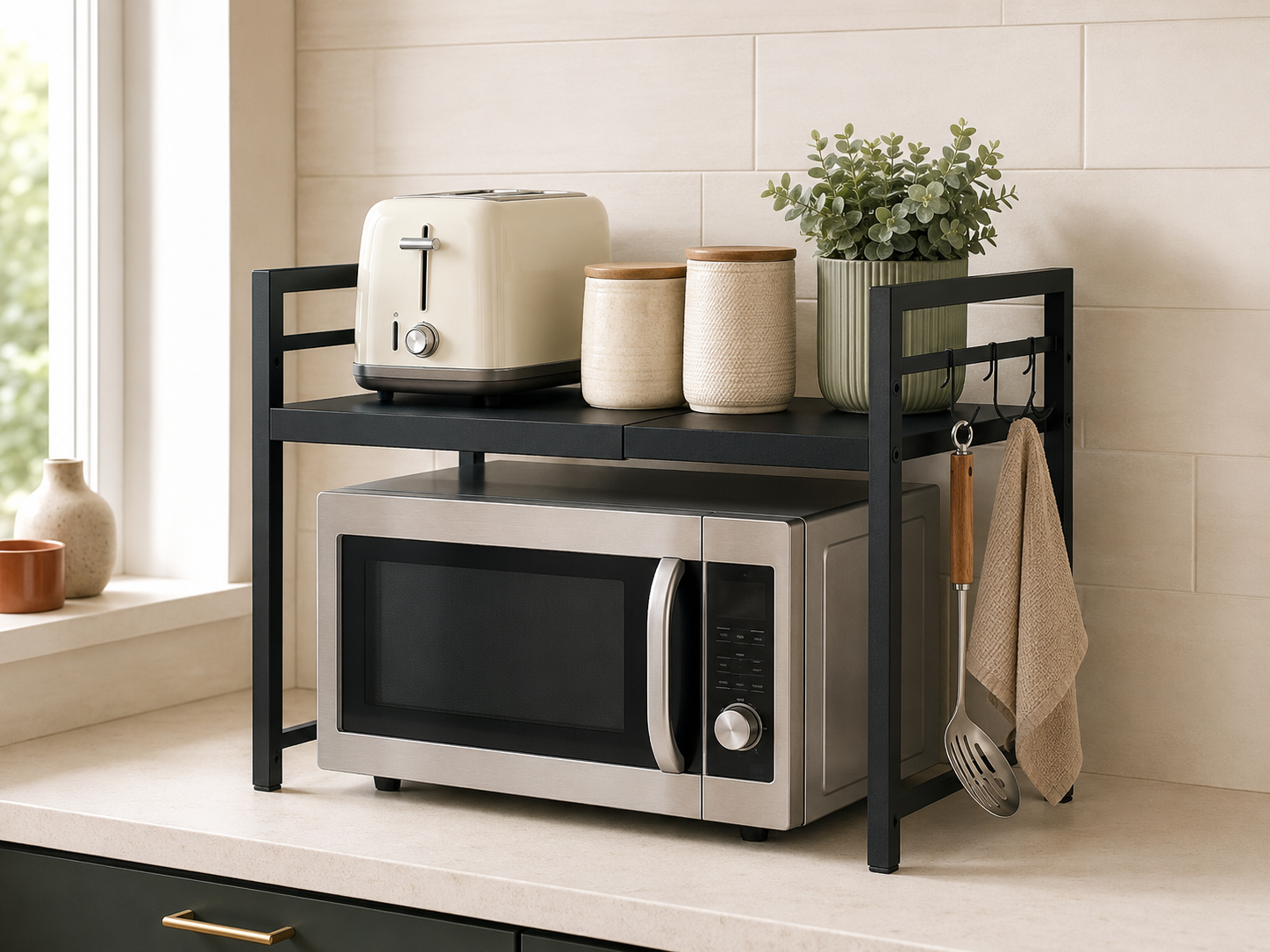
A freestanding rack with legs on either side of your microwave and a shelf above it turns that unused air into practical storage — without drilling into rental walls or cabinets. The adjustable frame fits different countertop footprints, while the upper shelf and side hooks give frequently used items a defined home.
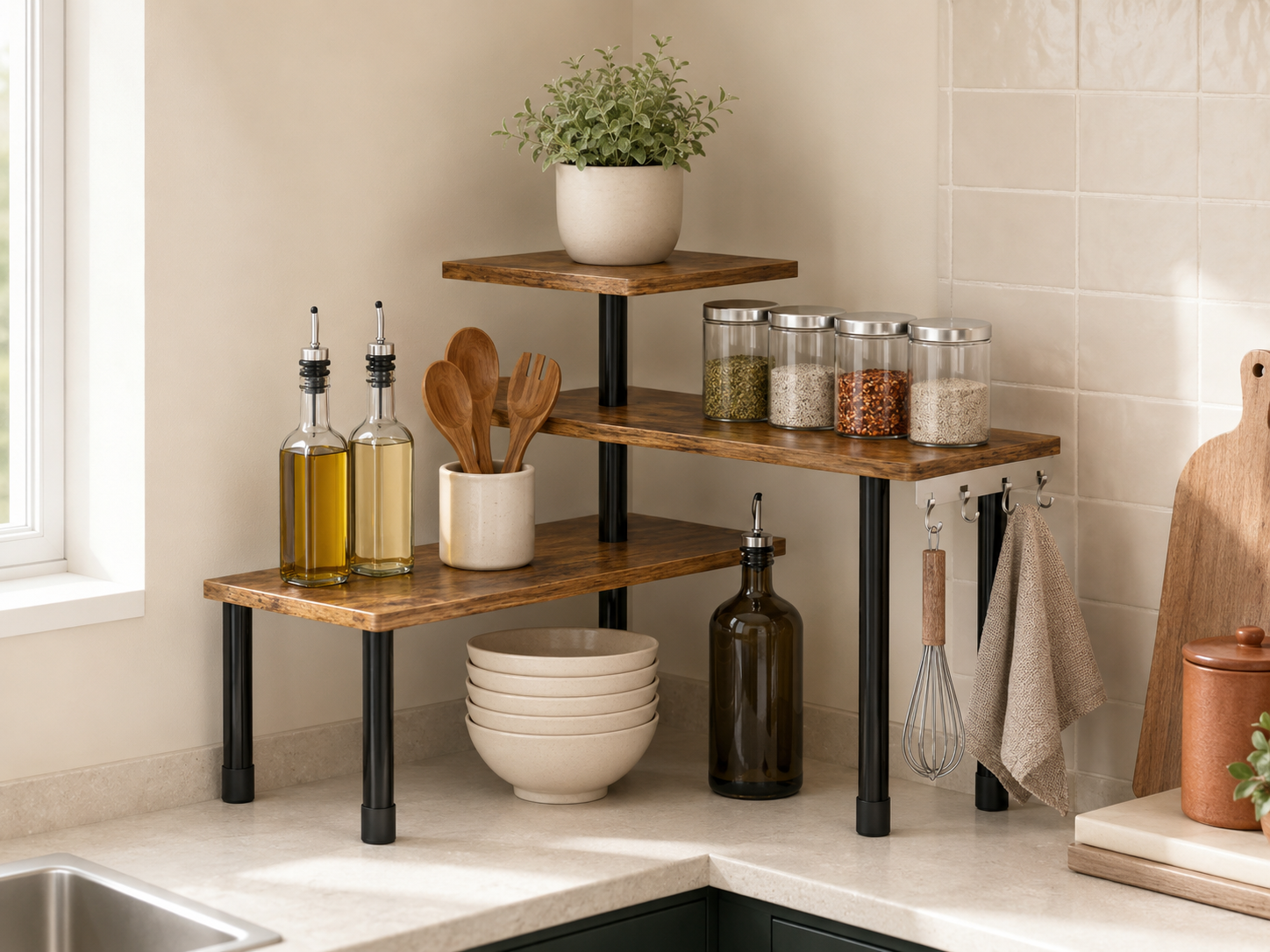
A tiered, moveable stand that fits into a dead counter corner and stacks small items — cutting boards, oils, a coffee setup — vertically instead of spreading them across the surface. No installation, and it can be picked up and repositioned any time your layout changes.
Inside Your Cabinets
Standard cabinets waste the vertical gap above stacked plates or cans, and standard drawers waste width once utensils start sliding around loose. A few targeted products handle almost all of it.
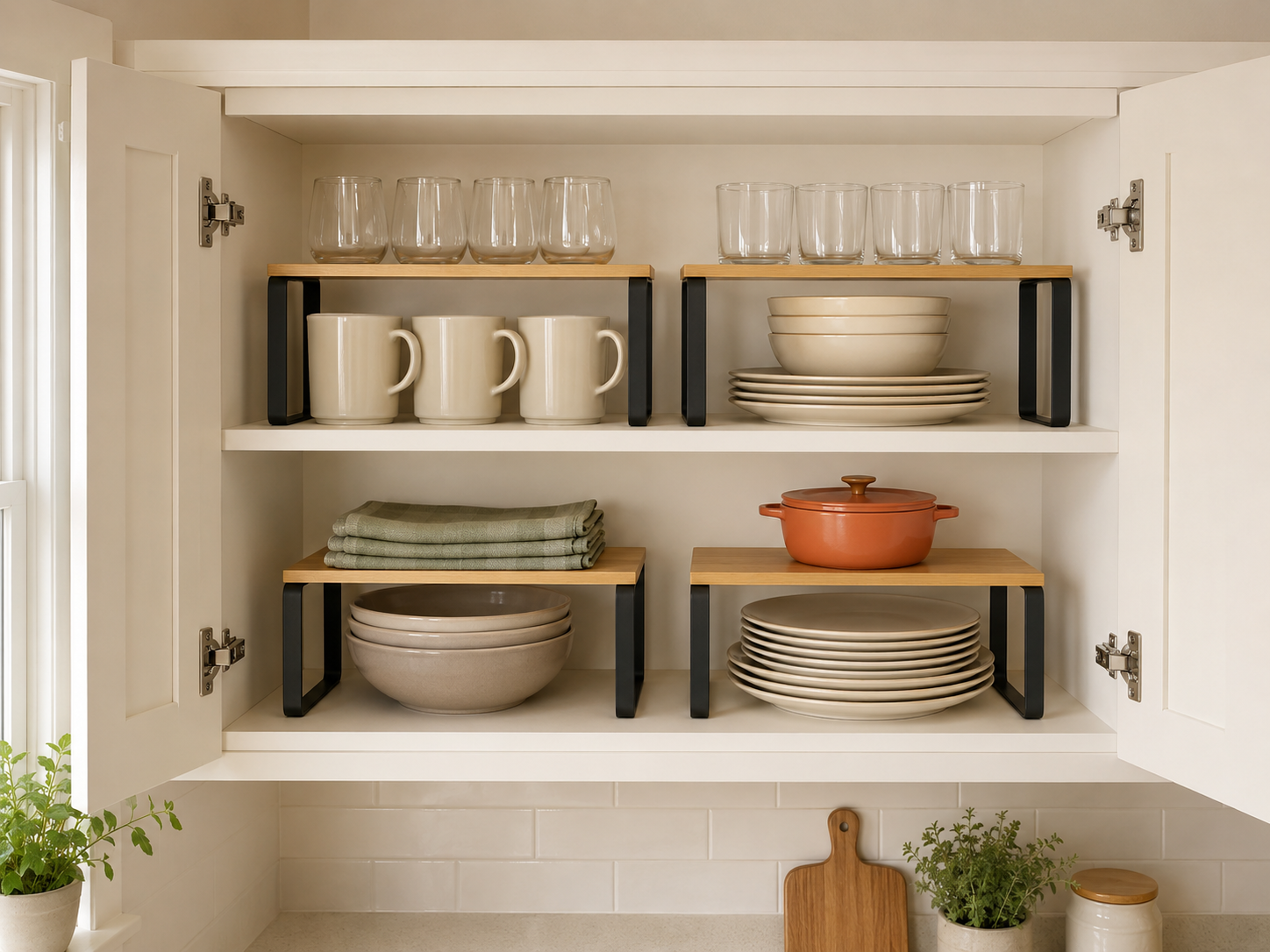
A short-legged shelf that sits on top of your existing cabinet shelf, splitting the space above it into a usable second tier. No installation — works in almost any cabinet with a few inches of unused air above the top layer of items. Not ideal for shallow cabinets, where the riser’s legs eat into usable depth.
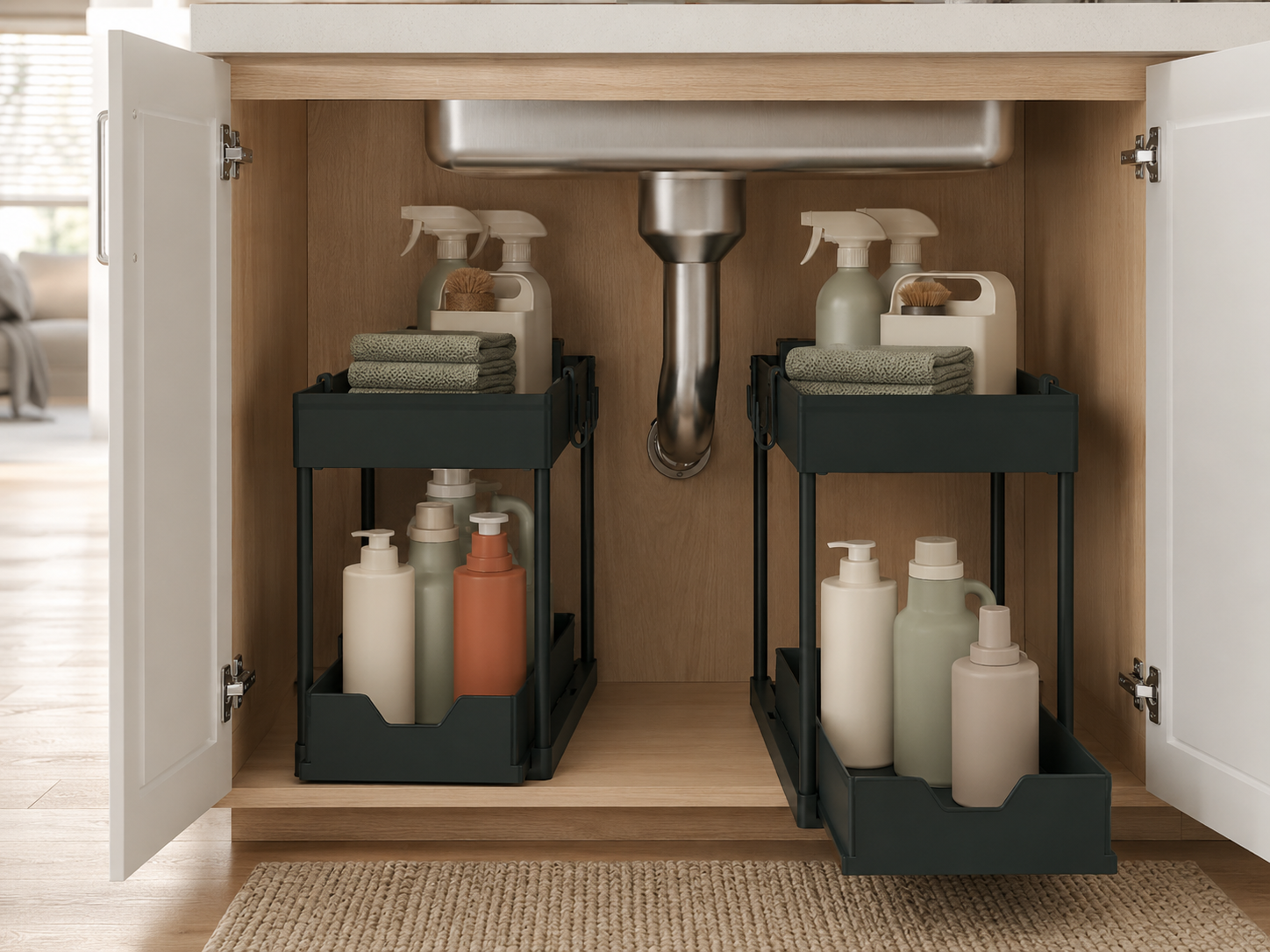
A sliding basket set that rolls the back of a deep, dark cabinet forward on rails so nothing gets permanently lost behind the front row. Best for lower cabinets where you’re currently unstacking pans to reach the one at the back — just confirm the listing’s freestanding/no-drill installation and its weight limit before loading heavy cookware.
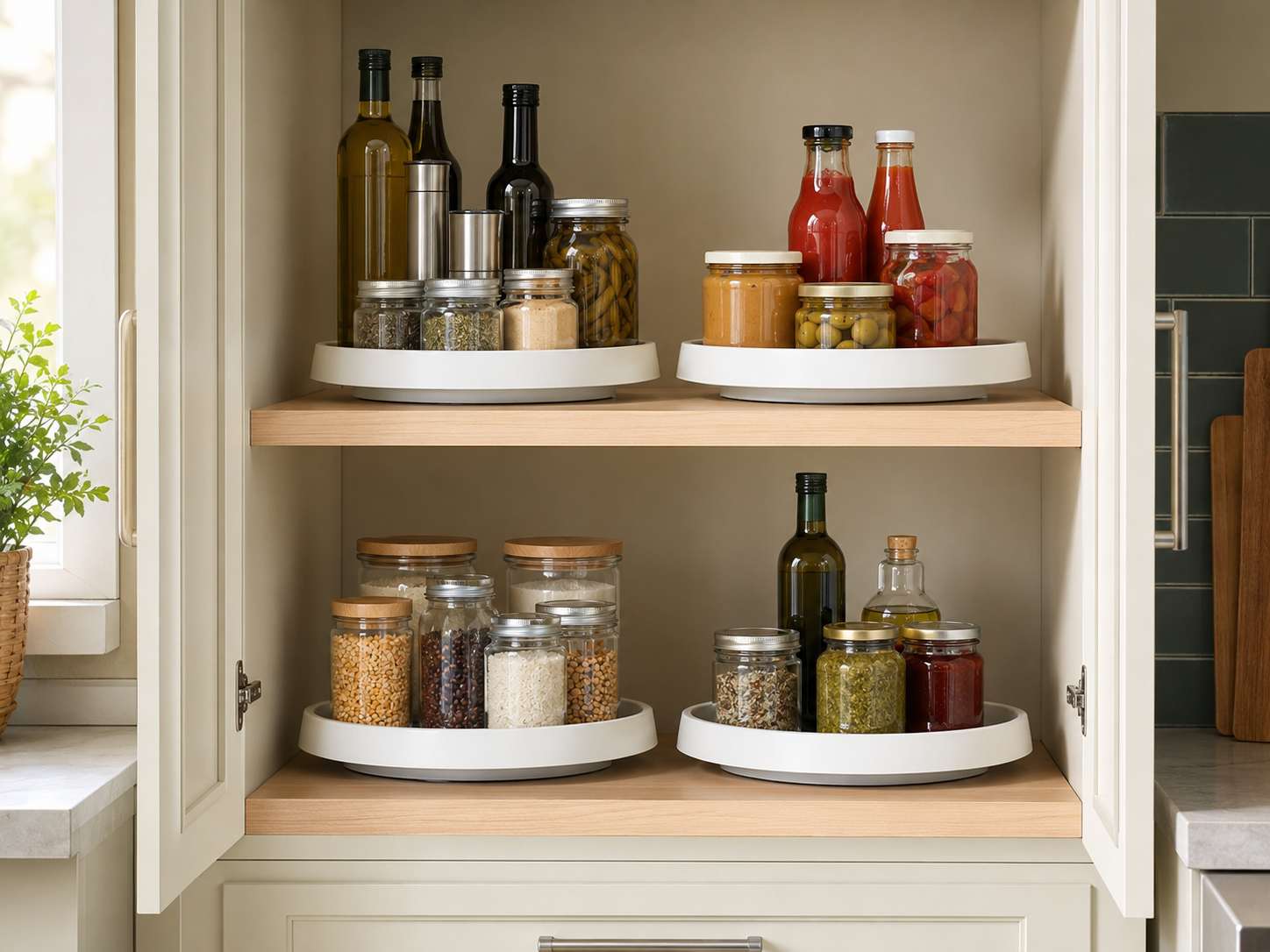
A rotating tray with a raised edge that puts everything within reach with a spin instead of a reach-and-dig — no installation, and the non-skid base keeps it in place during use. Best for deep corner cabinets; measure your cabinet’s usable diameter first, since a full turntable needs room to rotate freely.
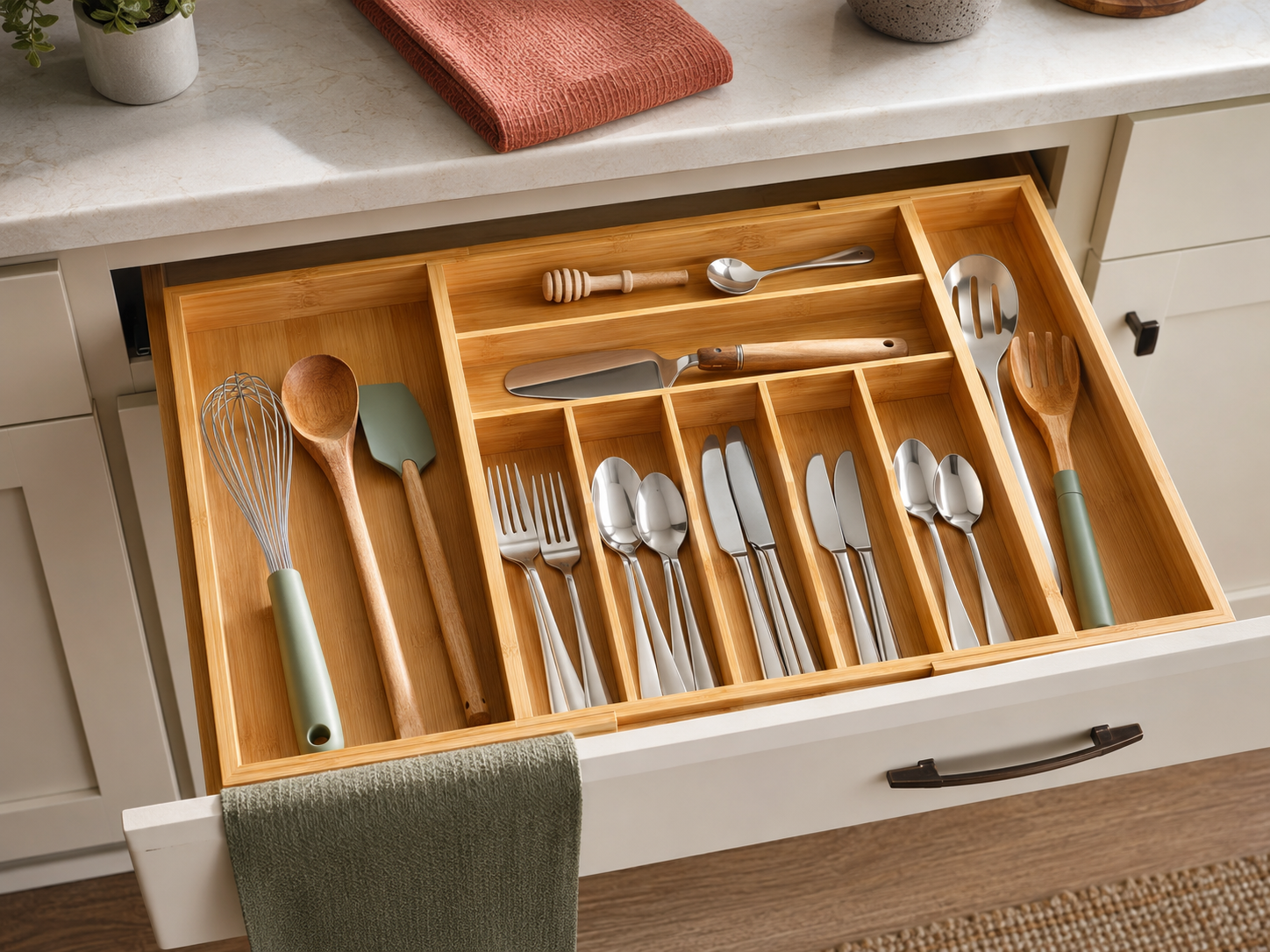
Expandable bamboo dividers that adjust to a drawer’s exact width, splitting one messy “everything drawer” into defined lanes for utensils and tools. No tools needed to install — just check the manufacturer’s stated minimum and maximum expansion against your drawer’s width and depth before buying.
Pantry & Dry Goods
Loose bags and half-used boxes are the main reason pantries (or pantry-substitute cabinets) feel smaller than they are.
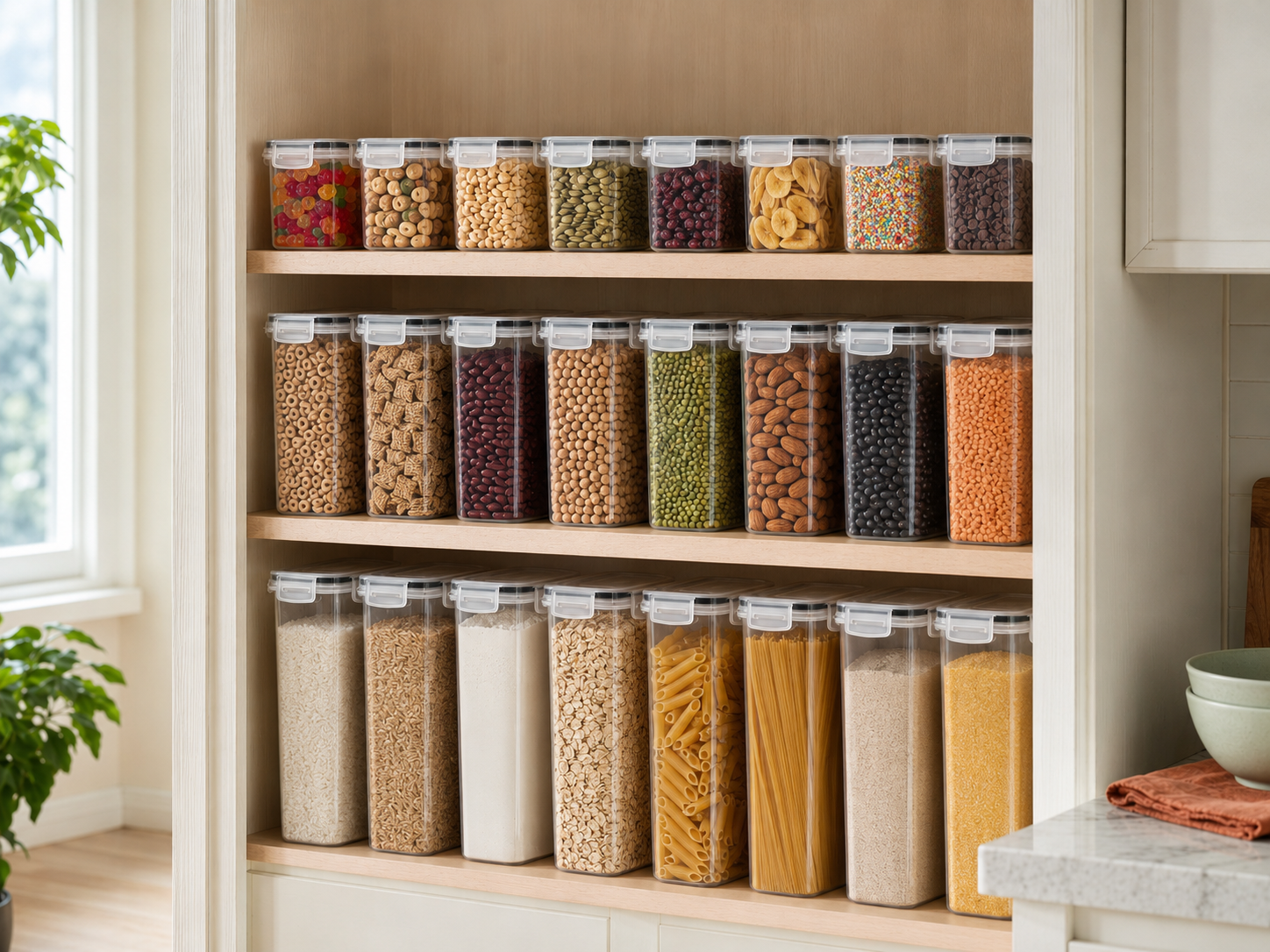
Transfers flour, rice, pasta, and cereal out of bulky boxes and bags into stackable, uniform containers with airtight locking lids, which can free up meaningful shelf space depending on what you’re currently storing. Labels and a marker are typically included for quick identification.
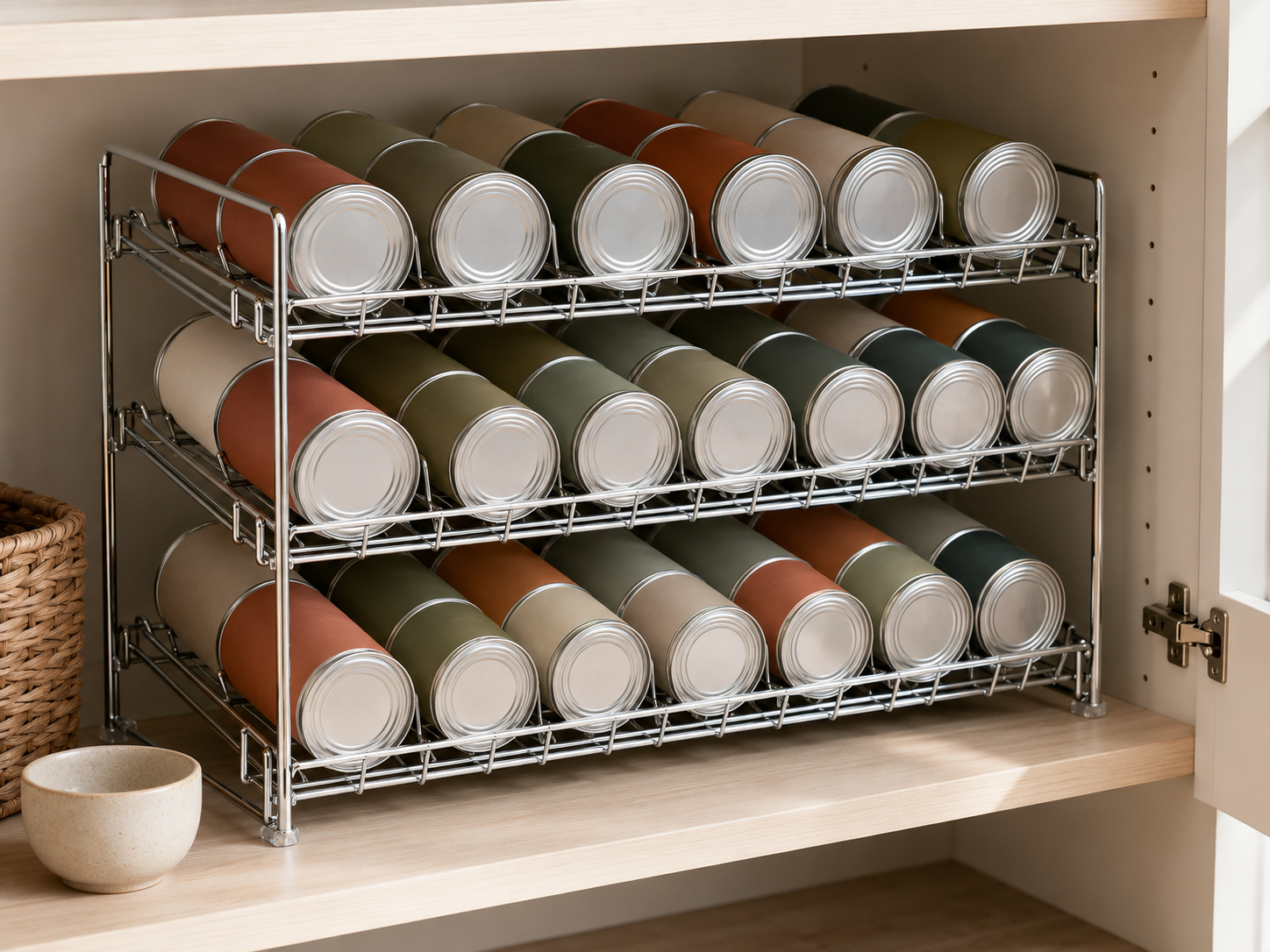
A stepped, gravity-fed rack that holds up to 36 cans and keeps them rolling forward as you use them, so the front row stays visible and accessible instead of cans getting stacked and forgotten at the back. The chrome tiers are stackable if you need to adjust the height to your cabinet or pantry shelf.
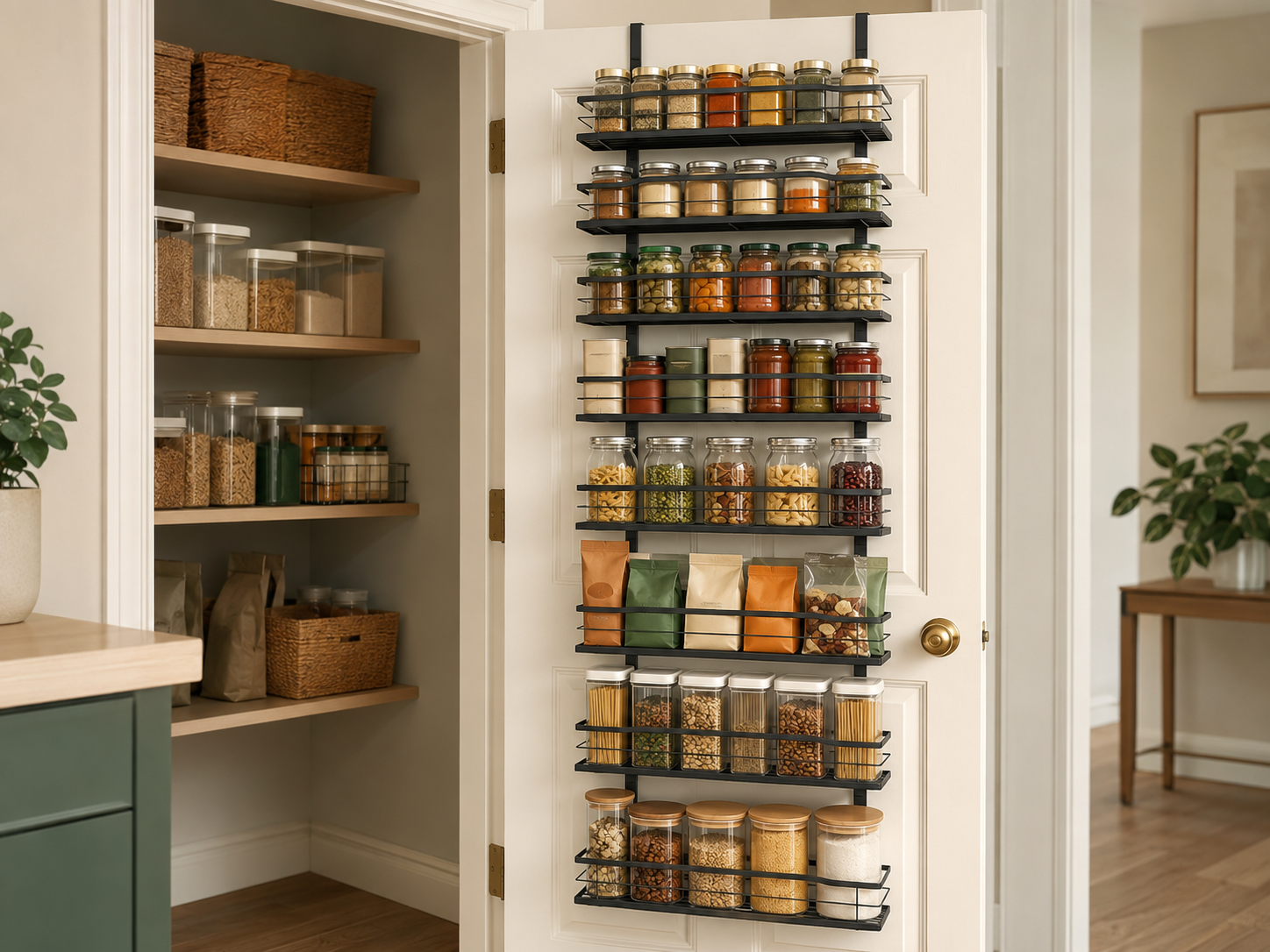
A set of clear pockets or wire baskets that hang over a pantry or cabinet door using top hooks — no screws, no adhesive. Common sizes run around 50″–52″ long by 18″ wide with a dozen or more pockets — measure your door’s thickness first to confirm it can still close fully once loaded.
Spices & Magnetic Storage
Spice jars and the blank vertical strip beside the fridge solve each other. Both are usually wasted space, and magnetic racks are a common way to use both.
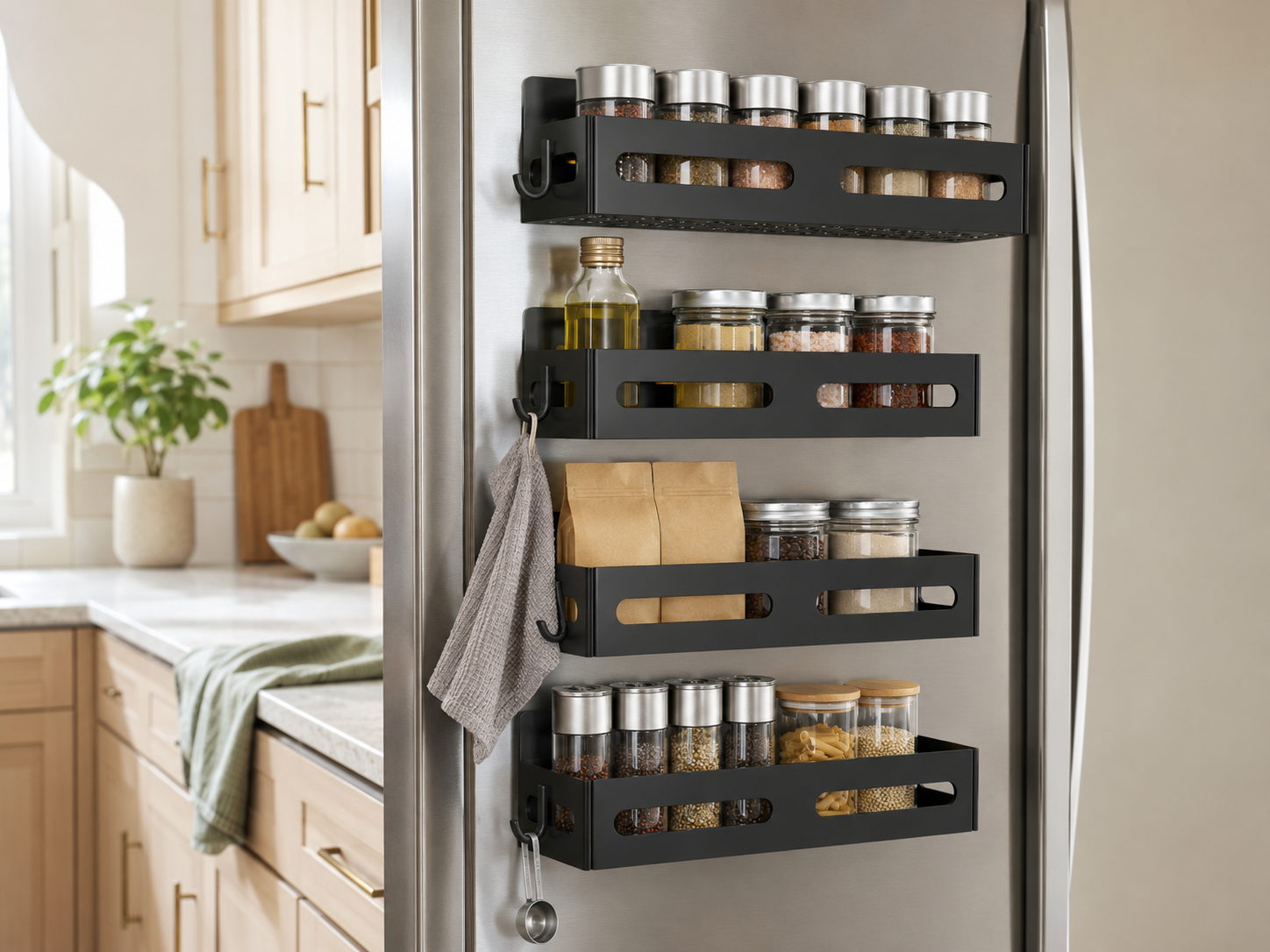
A rack or set of tins that sticks directly to the fridge door or side panel using magnets, turning unused vertical fridge surface into a spice display that’s visible while you cook. Works best on a magnetic-safe fridge — test with a regular fridge magnet first, since some stainless or panel-ready finishes aren’t magnetic.
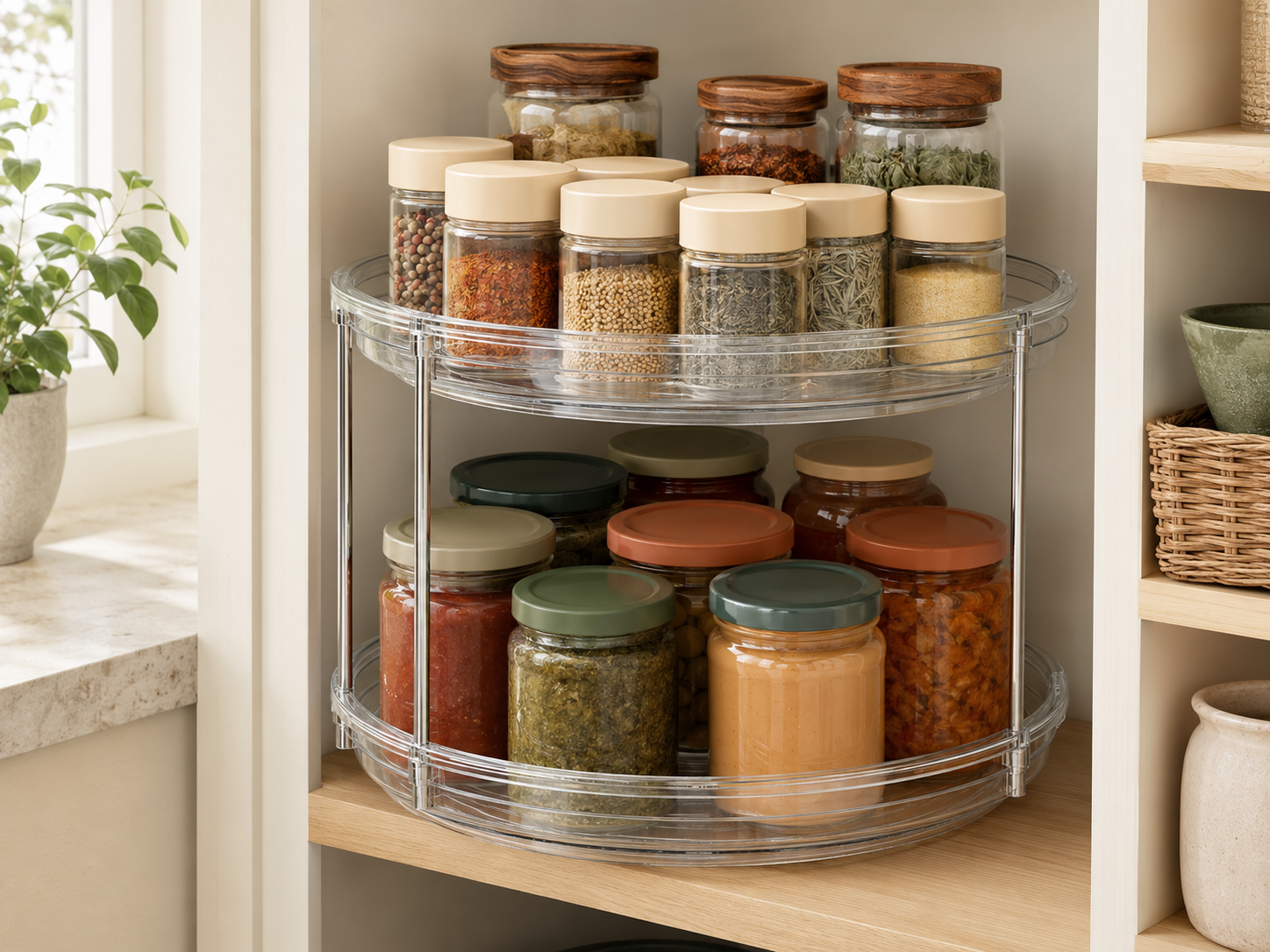
A tiered, rotating turntable that works as an alternative to a magnetic rack inside a cabinet for non-magnetic fridges, giving similar visibility to your spices and condiments without needing a magnetic surface. Spins into view with a turn instead of digging through a flat shelf.
Inside the Fridge & Freezer
An unorganized fridge makes it easy to lose track of food until it’s no longer good.
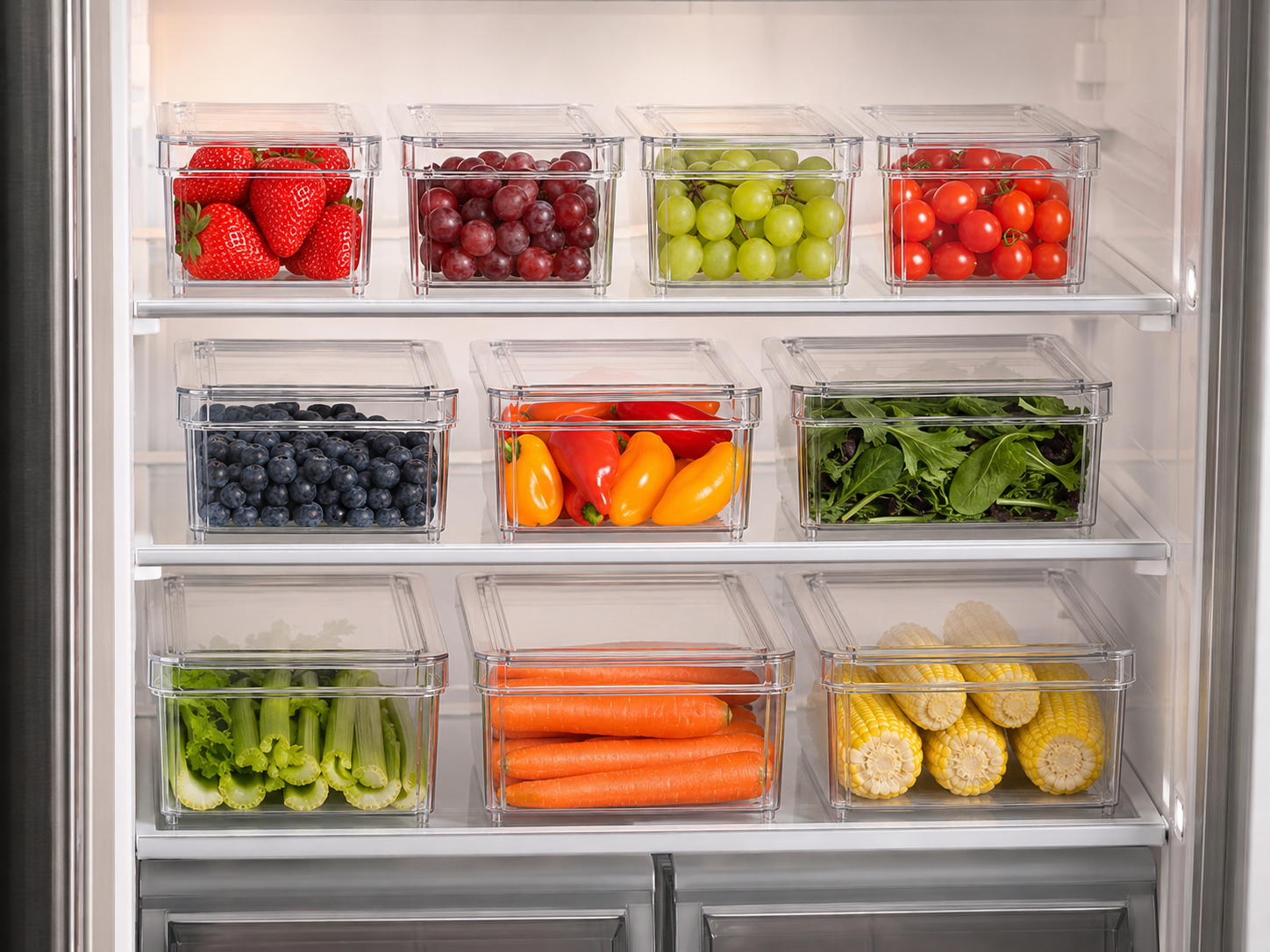
Stackable, pull-out bins used to group items by category (dairy, produce, leftovers) so you can see what you have at a glance. Best for fridges where items get pushed to the back and forgotten — measure your fridge shelf depth before ordering to make sure the largest bin fits.
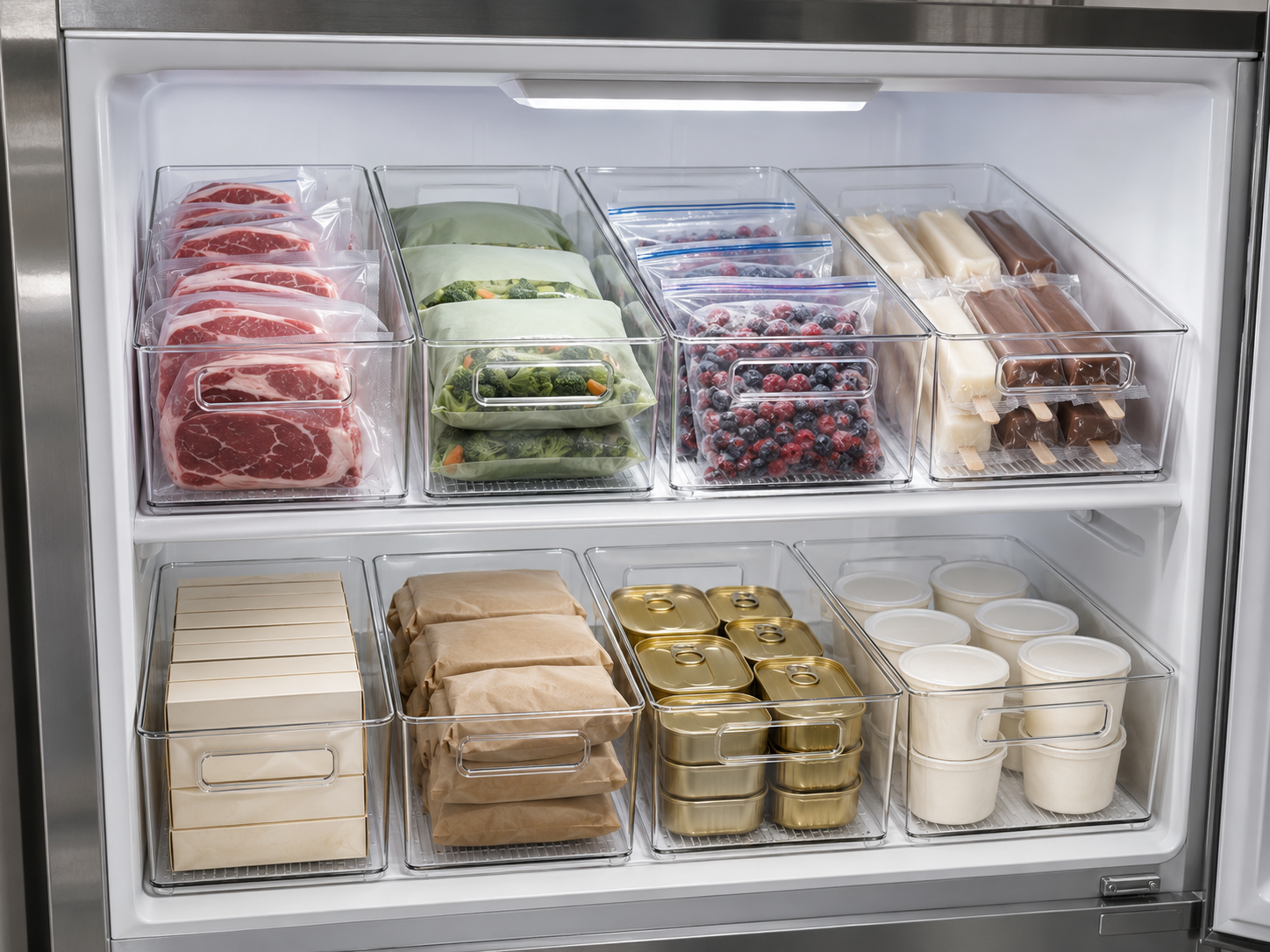
Vertical dividers and bins that keep bags and containers upright and visible instead of stacked flat and forgotten under the frost, so you can see what you have before it’s buried at the bottom of the freezer.
Cabinet Doors & Bare Walls
Beyond the pantry door mentioned above, cabinet doors and bare walls are among the most underused surfaces in a small kitchen — and among the easiest to use without a single hole.
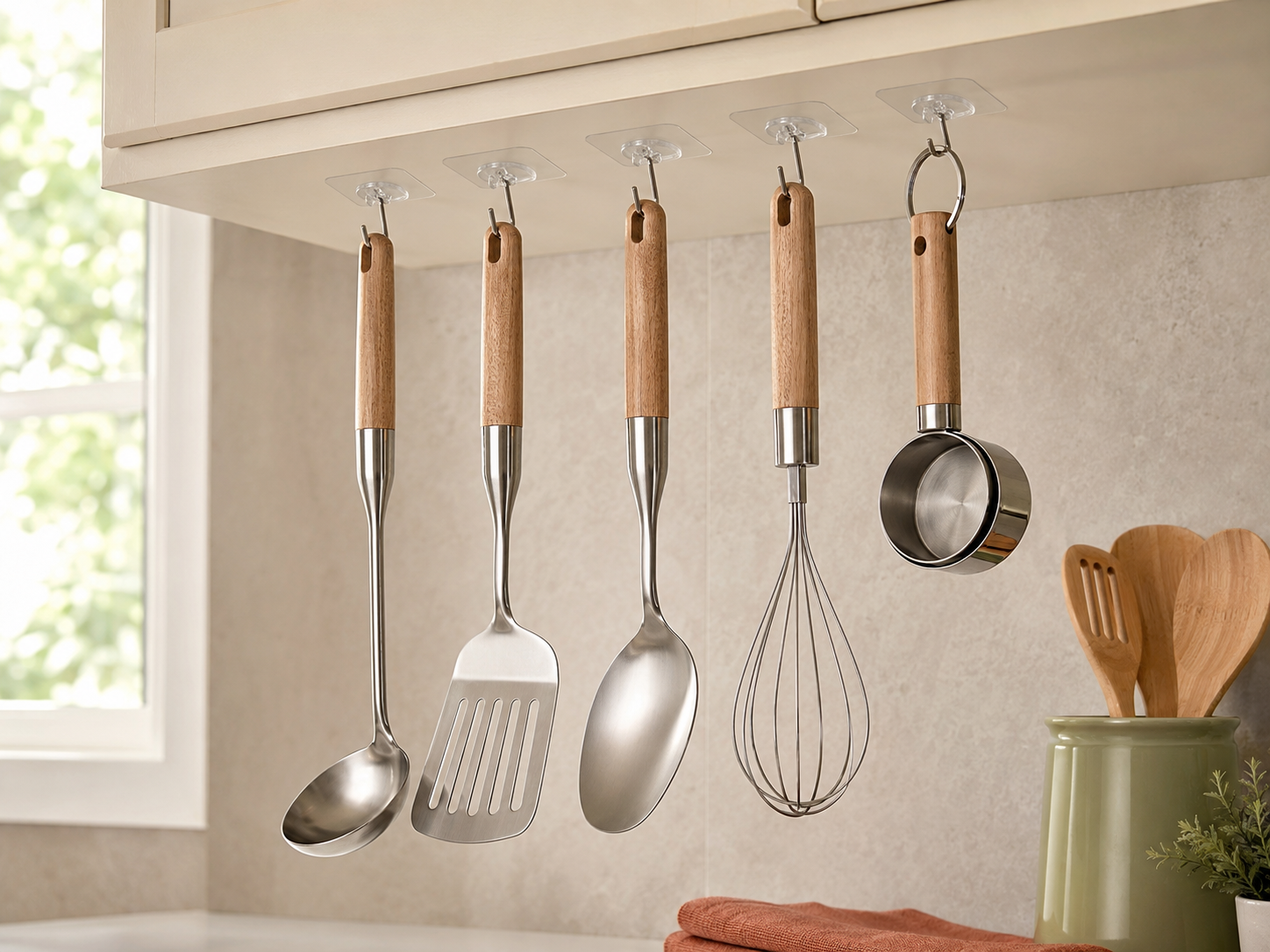
Rated removable adhesive hooks used to hang a utensil rail, towels, or oven mitts directly on a wall or cabinet side — no drilling. Match the hook’s rated weight capacity to what you plan to hang, and test on a hidden spot first since adhesive isn’t compatible with every paint or surface type.
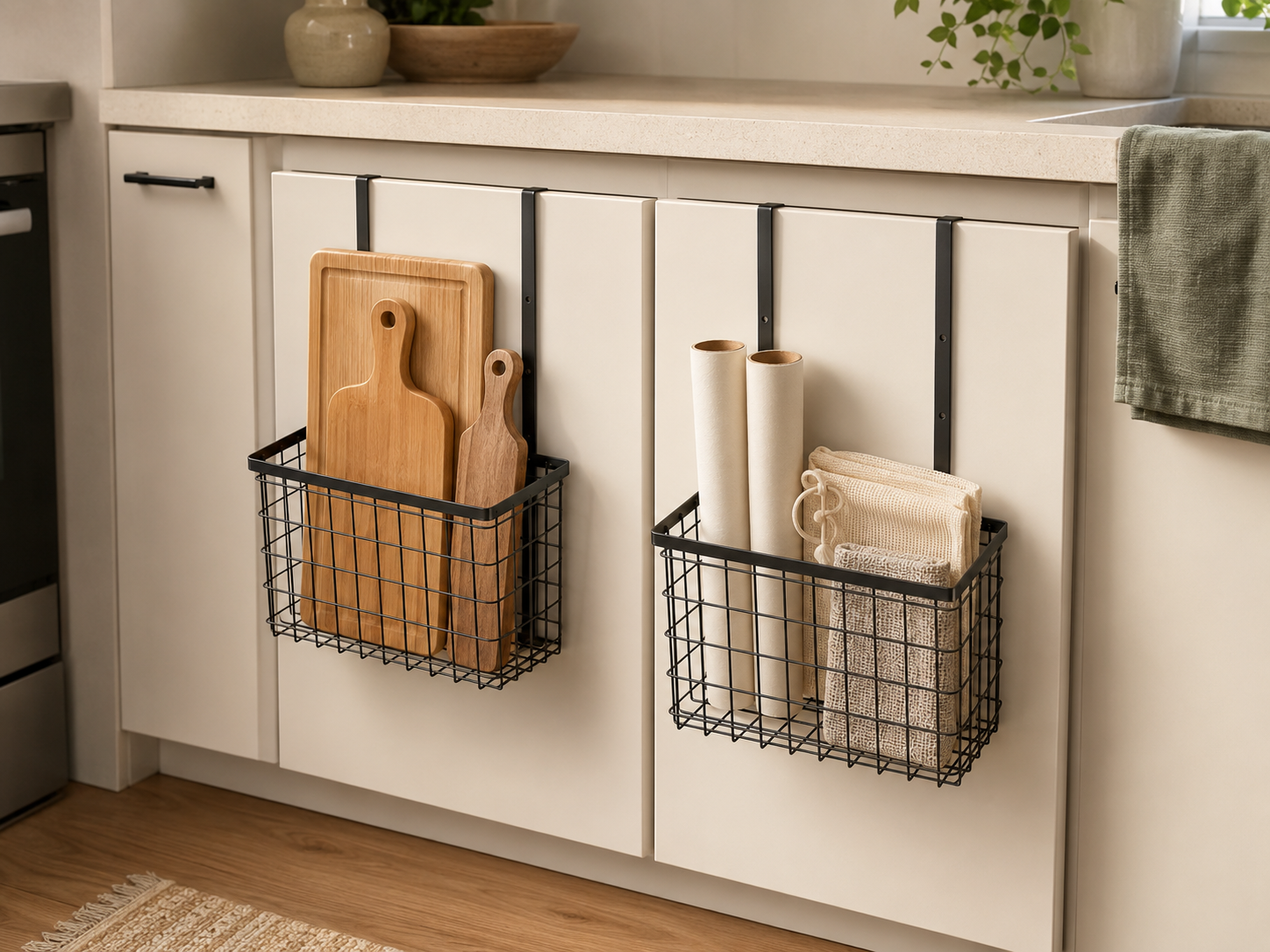
A wire rack that hooks over a lower cabinet door, purpose-built for pot lids, cutting boards, or foil and wrap boxes standing upright — no tools needed. Check the listing for door-thickness compatibility and make sure the door still has clearance to swing open once it’s attached.
Corners
Corners are structurally awkward in almost every small kitchen — too deep to reach into flat, too narrow to shelve normally.
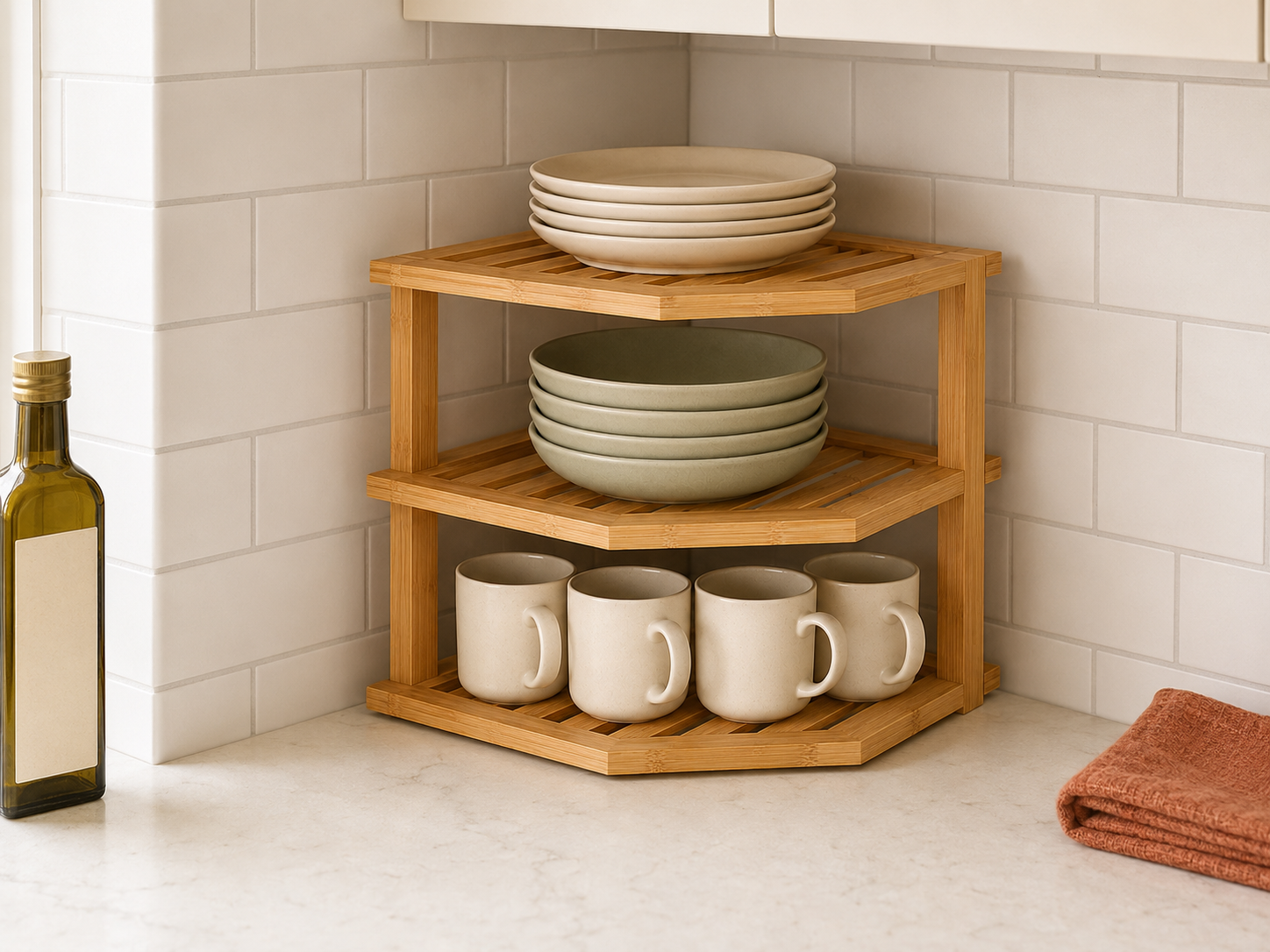
A stepped bamboo shelf designed specifically for a corner footprint, used either on the counter or inside a corner cabinet, keeping every tier of plates, bowls, mugs, or cups visible instead of one item blocking the next. Measure your corner’s usable depth and height before choosing.
The Rolling Cart: One Product, Three Jobs
Three separate problems — a narrow gap beside the fridge, not enough prep surface, and the need for flexible mobile storage — are usually solved by the same product, so it earns its own section instead of three overlapping ones.
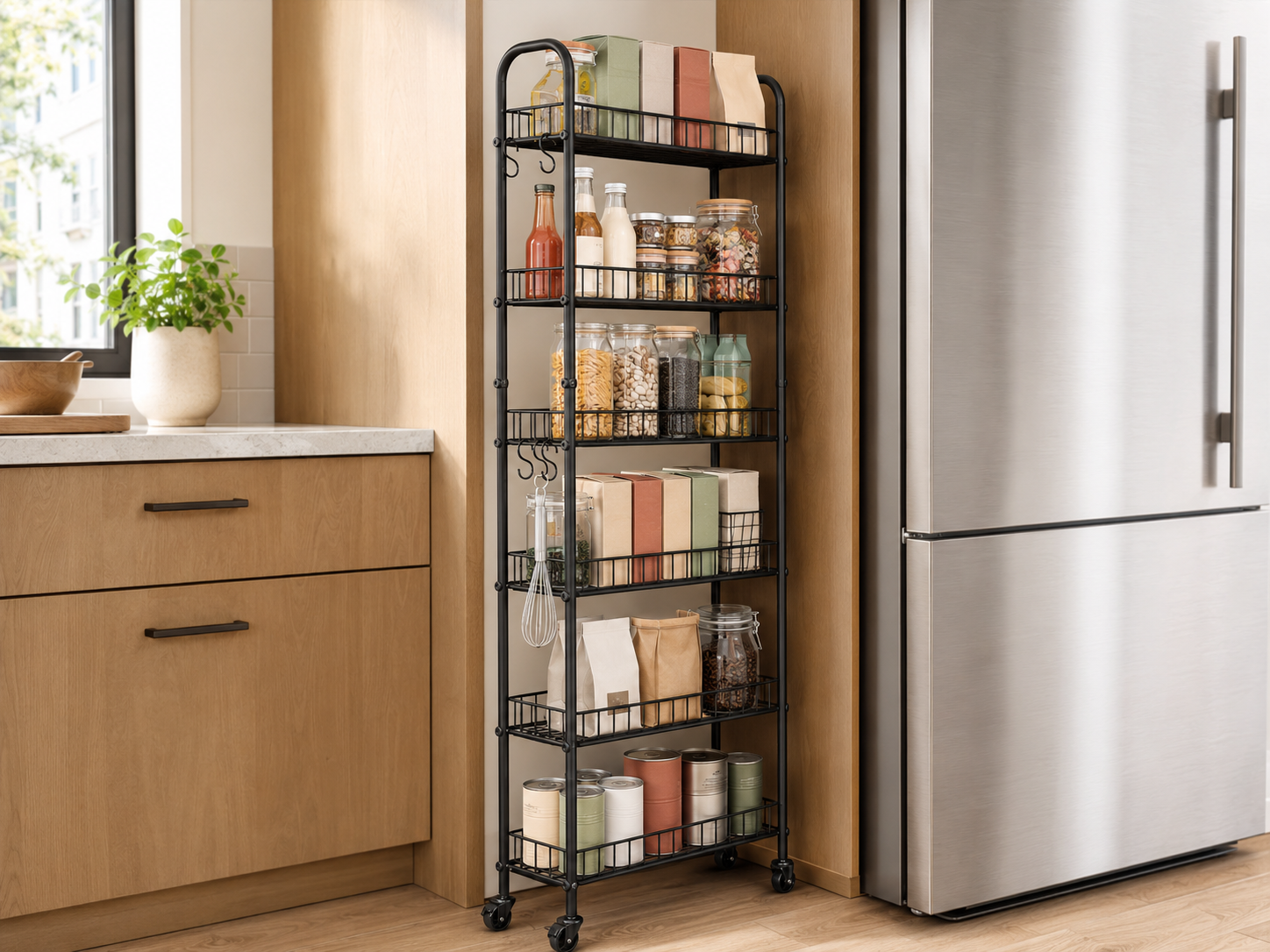
A narrow-profile cart that fits into the gap beside a fridge or at the end of a counter run and functions as mobile pantry or utility storage. Best for studio and one-bedroom kitchens with little to no pantry space — confirm the exact width, height, and shelf count against your measured floor gap before ordering.
Sink Area & Dish Drying
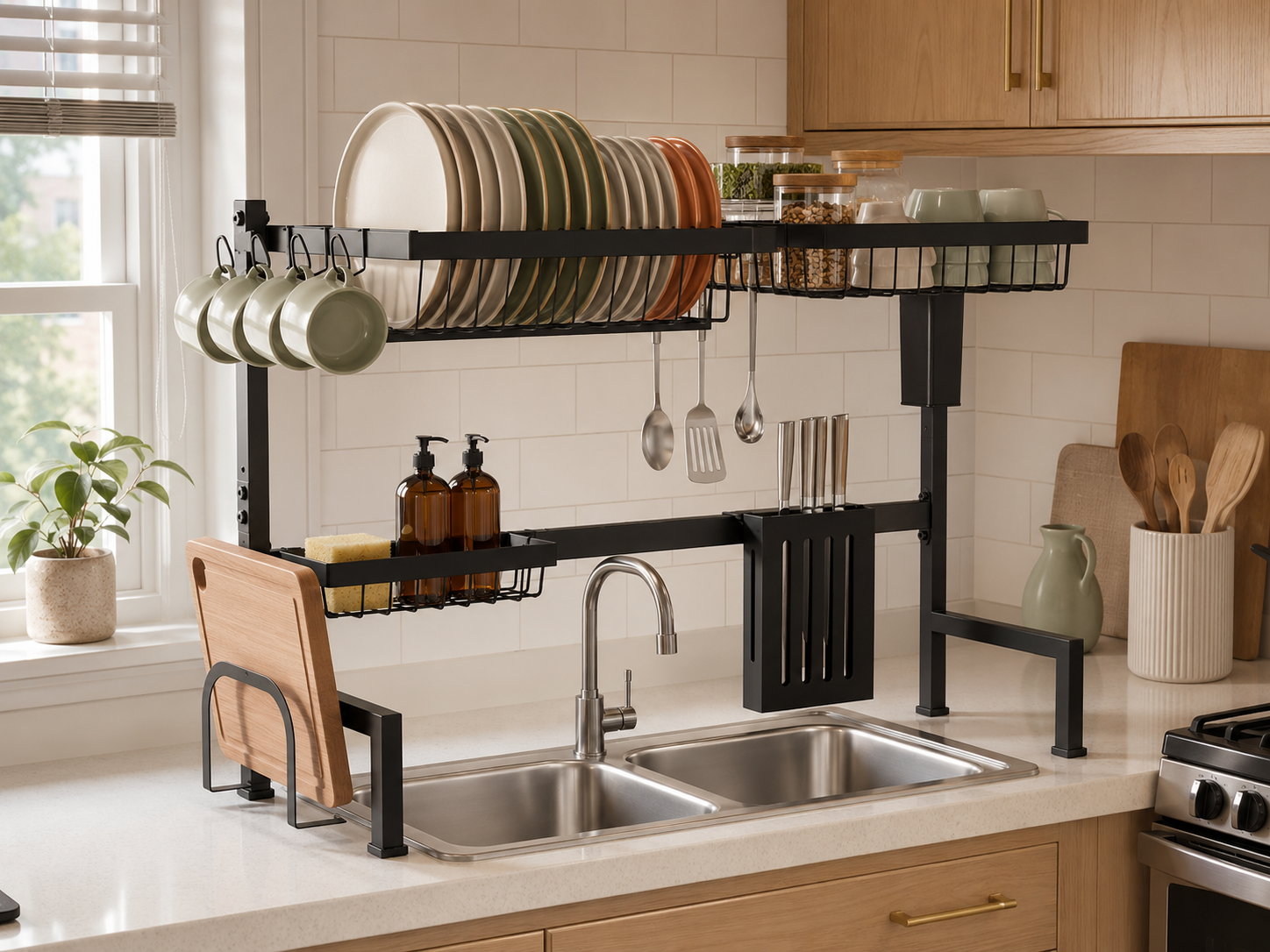
A rack that spans the sink itself on adjustable feet, drying dishes directly over the basin instead of taking up counter space beside it. Best for kitchens without a dishwasher — measure your sink’s width and check faucet clearance before buying, since a tall rack can interfere with faucet height.
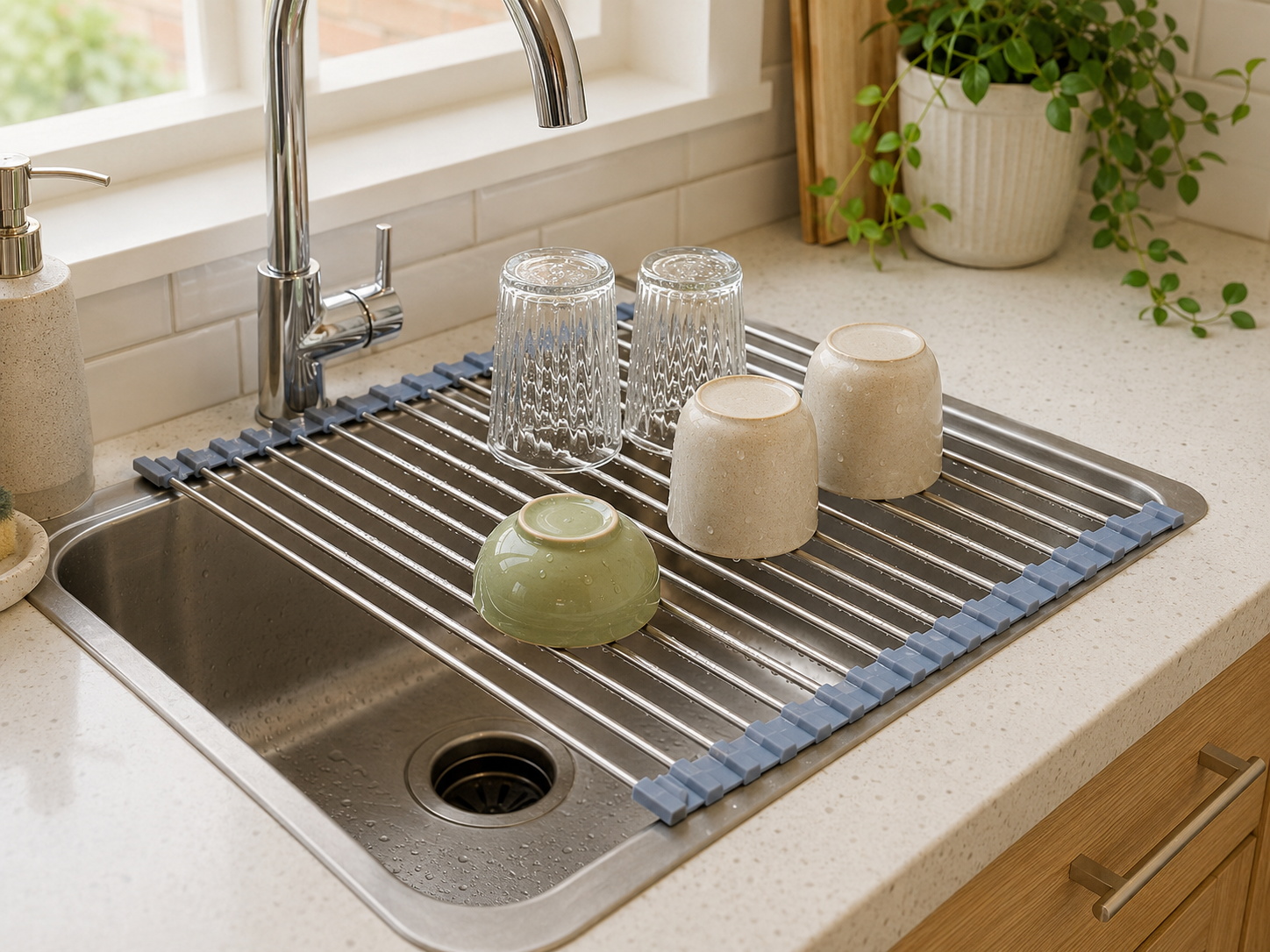
A flexible, foldable alternative to a rigid dish rack that stores flat in a drawer when not in use. Works both over the sink and directly on the counter, making it a good backup for kitchens with limited fixed drying space.
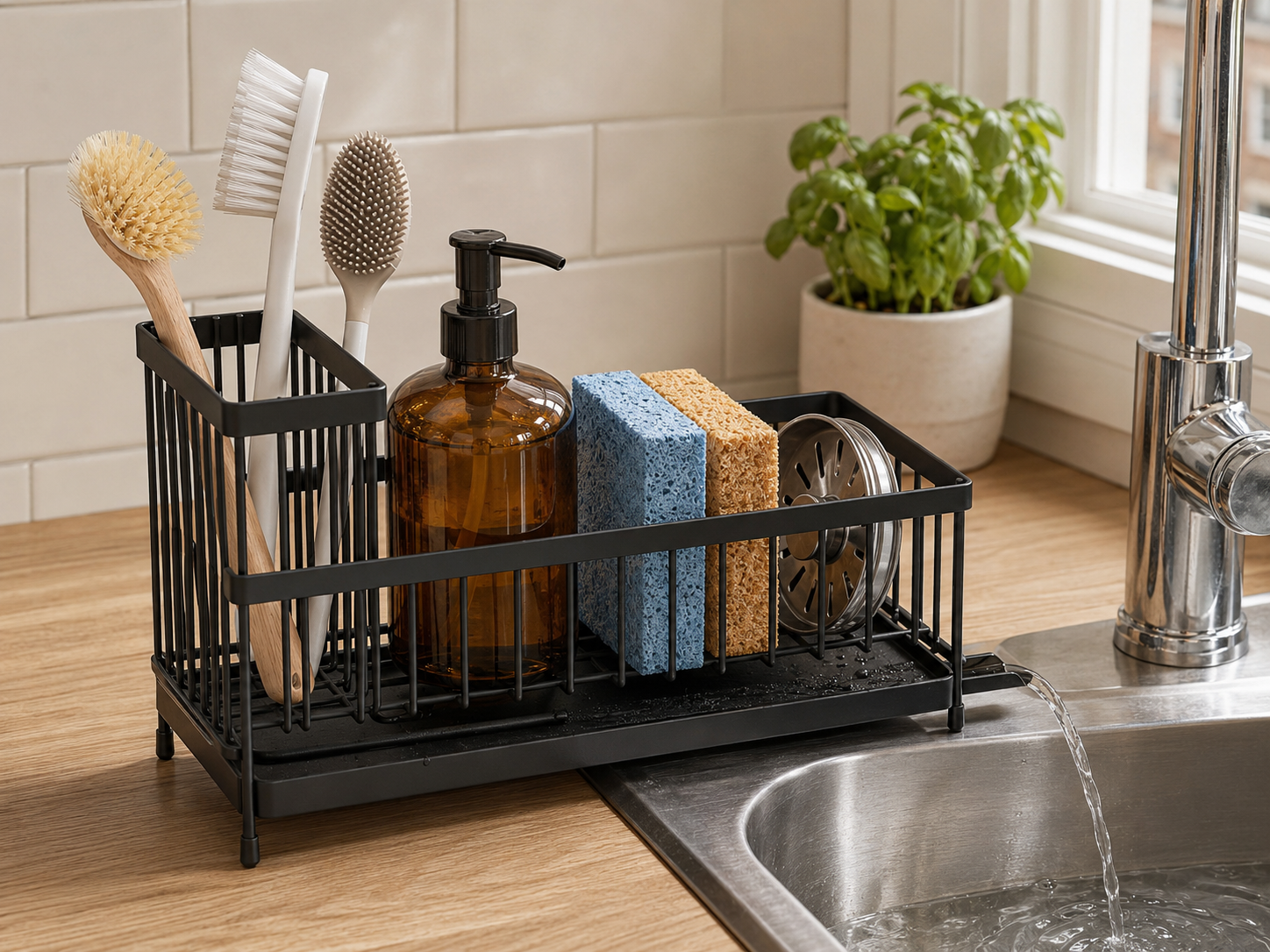
A suction or adhesive-mounted holder that keeps a wet sponge or scrub brush off the sink edge, draining water back into the basin instead of pooling on the counter. A small fix that keeps the sink area looking tidy between washes.
Pots, Pans & Baking Trays
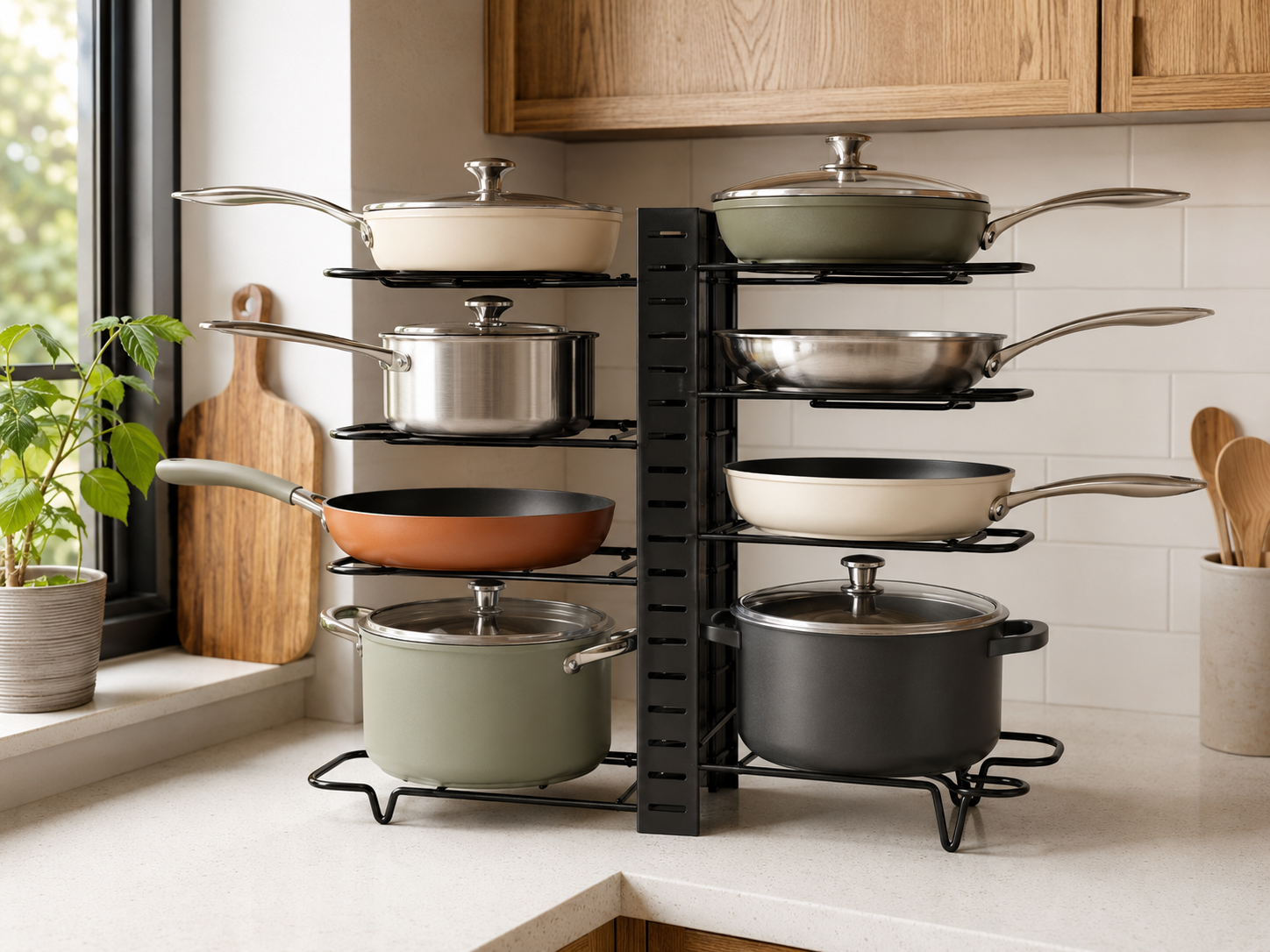
Expandable wire dividers, placed inside a lower cabinet, that hold pans upright instead of nested and scraping against each other. Best for cabinets where pans are currently stacked and hard to pull apart — check the listing’s expandable width range against your cabinet’s interior width first.
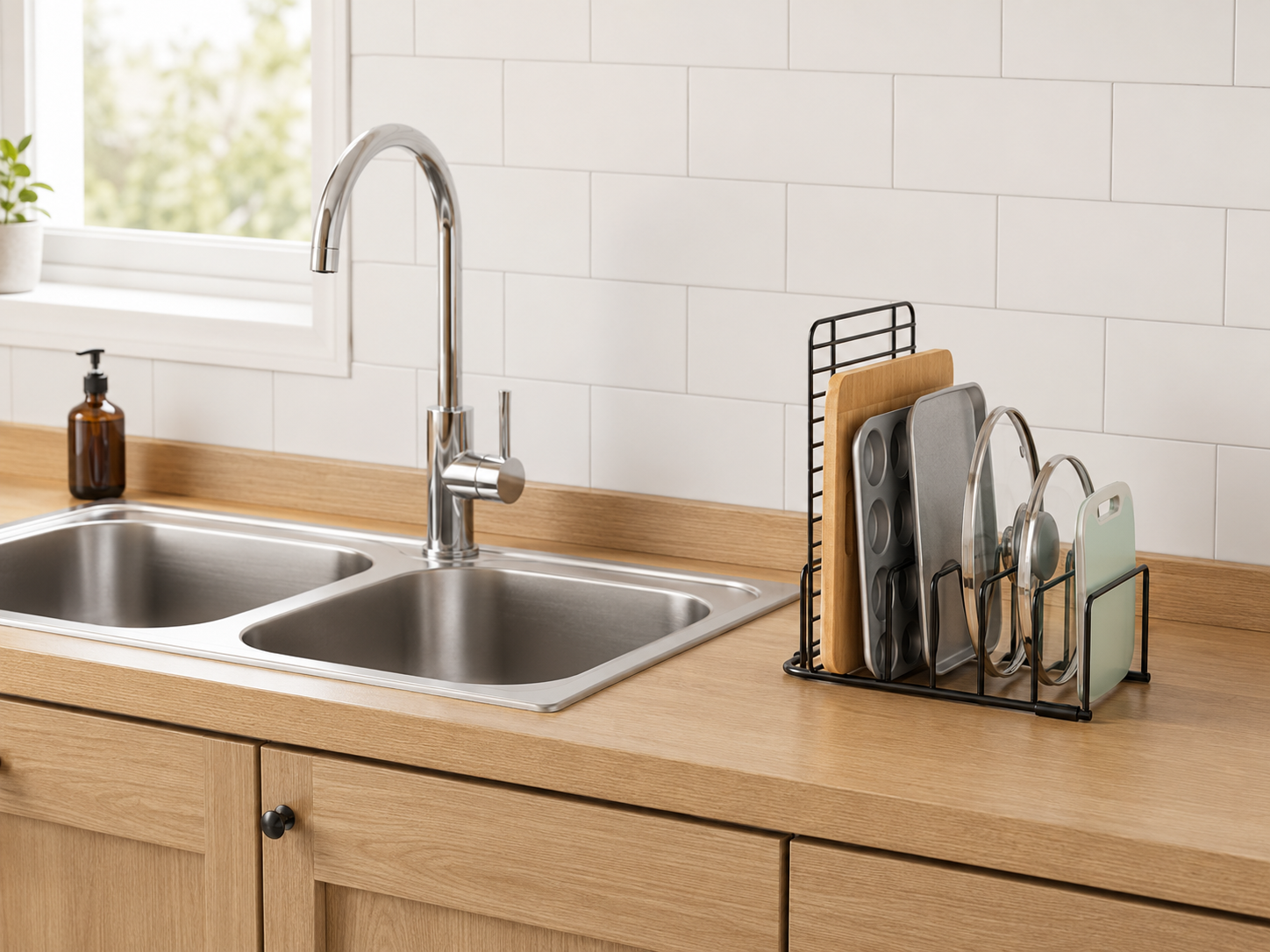
Baking sheets and cutting boards stored flat waste a surprising amount of cabinet depth. This vertical rack turns them into slim, upright slots that are easier to pull one item from without lifting the whole stack.
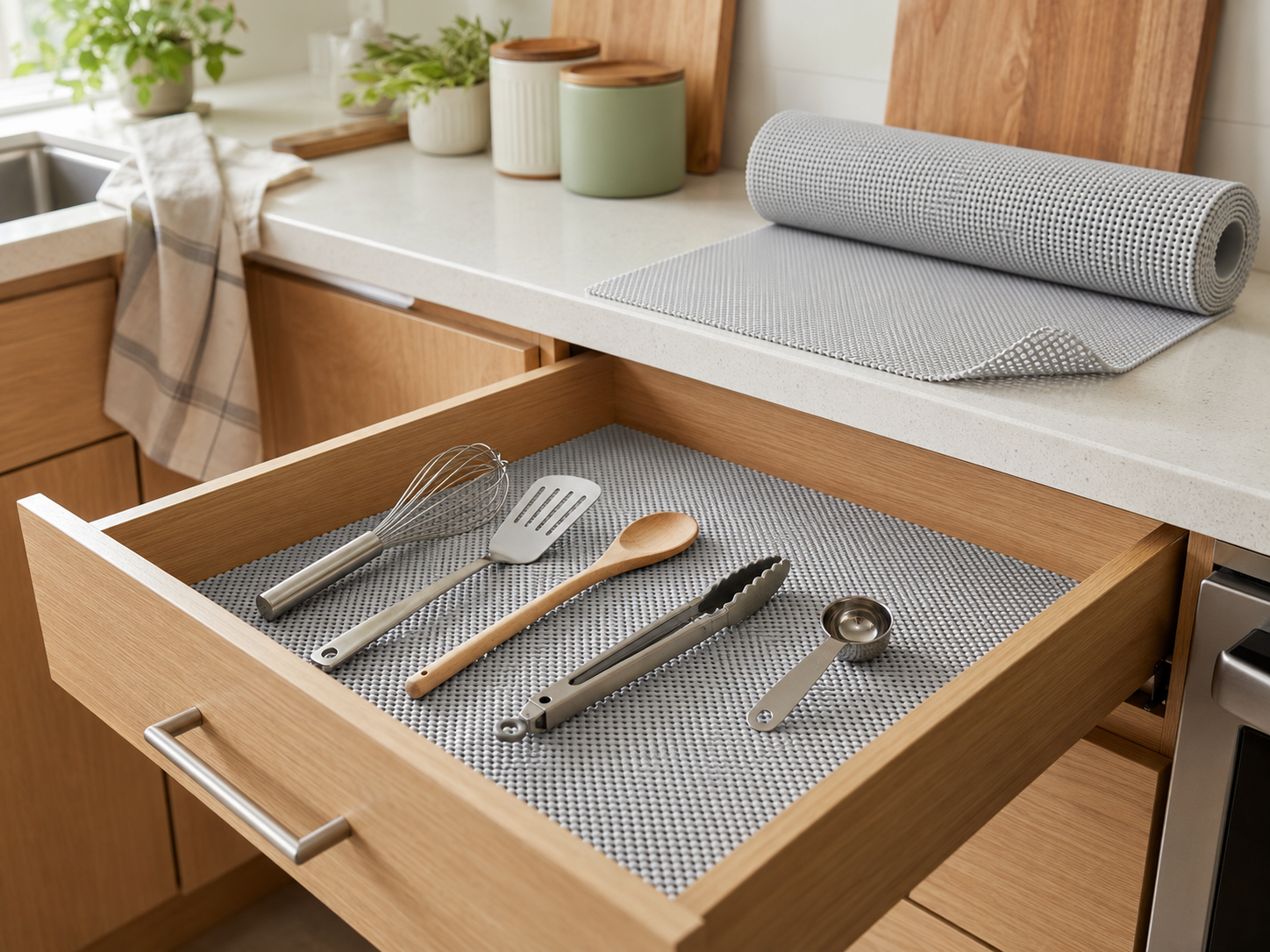
A non-adhesive, non-slip liner that protects rental drawer and shelf surfaces from scratches and spills without leaving any residue behind at move-out. An easy addition to any pot, pan, or bakeware cabinet — cut it to size with scissors, no adhesive required.
Trash & Recycling
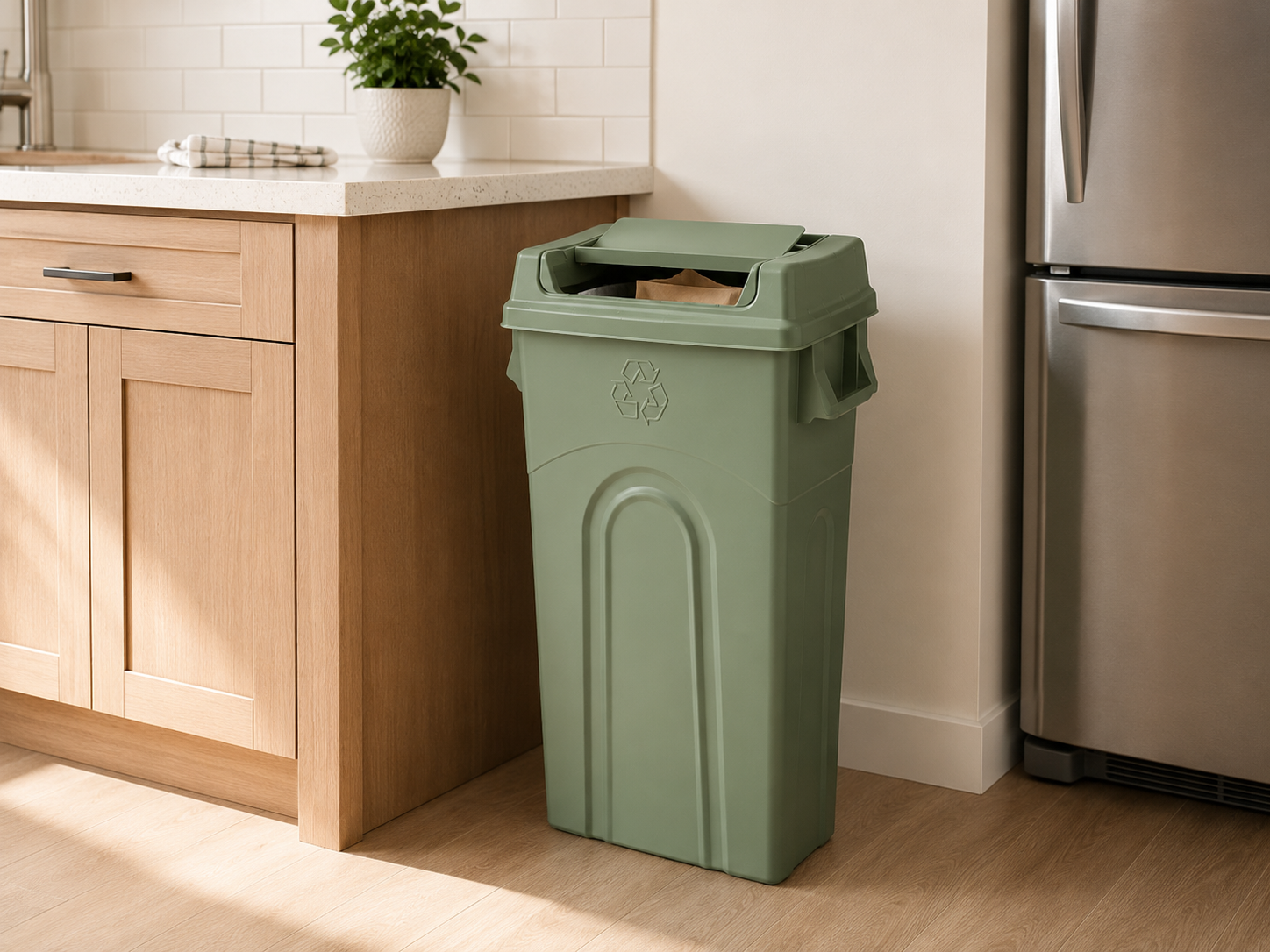
A narrow-profile, tall bin that fits gaps a standard-width trash can can’t, which matters most in kitchens too small for a full-size can and a recycling bin side by side. Built-in carrying handles make it easy to pull out and empty.
Safety & Lease-Friendly Habits
No-drill doesn’t mean no-limits. Many storage products in this guide have stated weight limits that should be checked before loading, and overloading is a common reason these products fail early or come loose unexpectedly.
Check the weight limit before loading, not after — many adhesive hooks and magnetic racks are rated for a fairly light load. Add non-slip pads under freestanding risers and carts on smooth or tile flooring to reduce shifting.
Adhesive isn’t compatible with every type of paint or surface — always check the product’s stated compatibility and test on a hidden spot first. Re-read your lease for any clause specifically about adhesive products, tension rods, or door-mounted hardware, since some leases treat these differently from drilling.
Mistakes to Avoid
A poor fit is one of the more commonly cited reasons for returning kitchen organizers.
Some leases restrict adhesive products entirely, or require approval for anything installed on cabinet doors.
A slow, low-angle removal (with light heat from a hairdryer if the brand allows it) helps protect paint — fast removal is more likely to damage it.
Organizing the pantry first when the real problem is the countertop just moves the clutter, it doesn’t remove it.
A magnetic rack rated for spice jars will not safely hold canned goods.
Organize Your Kitchen in One Day: The Plan
You don’t need a weekend for this — one focused day covers the highest-impact zones.
Measure your cabinets, under-sink area, and any floor gaps. Clear the counter completely and install the microwave rack or corner shelf first — it’s usually the fastest visible win.
Add shelf risers to upper cabinets, a pull-out organizer or Lazy Susan to the deepest cabinet, and drawer dividers to the messiest drawer.
Install the under-sink organizer and tension rod, then set up the over-the-door pantry organizer and transfer dry goods into airtight containers.
Add fridge bins and the magnetic spice rack, hang any adhesive hooks for daily-use tools, and do a final pass to confirm nothing is overloaded past its weight limit.
By the end of the day, every major zone has a designated spot — which is usually what keeps small apartment kitchen organization working long-term, more than any single product does.
FAQ
Do I really need all 26 ideas, or can I start smaller?
Start with two or three: a shelf riser, drawer dividers, and whichever zone bothers you most daily. Most of the disorganization in a small kitchen tends to come from just two or three problem zones, not all of them at once.
Will adhesive products damage rental walls or cabinets?
Rated removable adhesive is designed to minimize that risk, but “rated removable” and “any adhesive” are not the same thing. Always check the product specifies removable/no-residue use, test on a hidden spot first, and follow the brand’s removal method.
What should I measure before buying anything?
Cabinet interior height, width, and depth; the floor gap beside the fridge if you’re considering a cart; under-sink clearance around the pipes; and sink width if you want an over-the-sink rack. These numbers help reduce avoidable returns.
Can I use these ideas if my lease specifically prohibits wall modifications?
Yes — every idea in this guide is designed to avoid drilling and permanent wall changes. Just double-check any lease clause about adhesive products, tension rods, or door-mounted hardware specifically, since some leases treat these differently from drilling.
As an Amazon Associate I earn from qualifying purchases. This post contains affiliate links. If you purchase through these links, we may earn a commission at no additional cost to you. Product recommendations are based on specifications, fit, and typical use cases. Always confirm current pricing, dimensions, and availability directly on Amazon before purchasing.